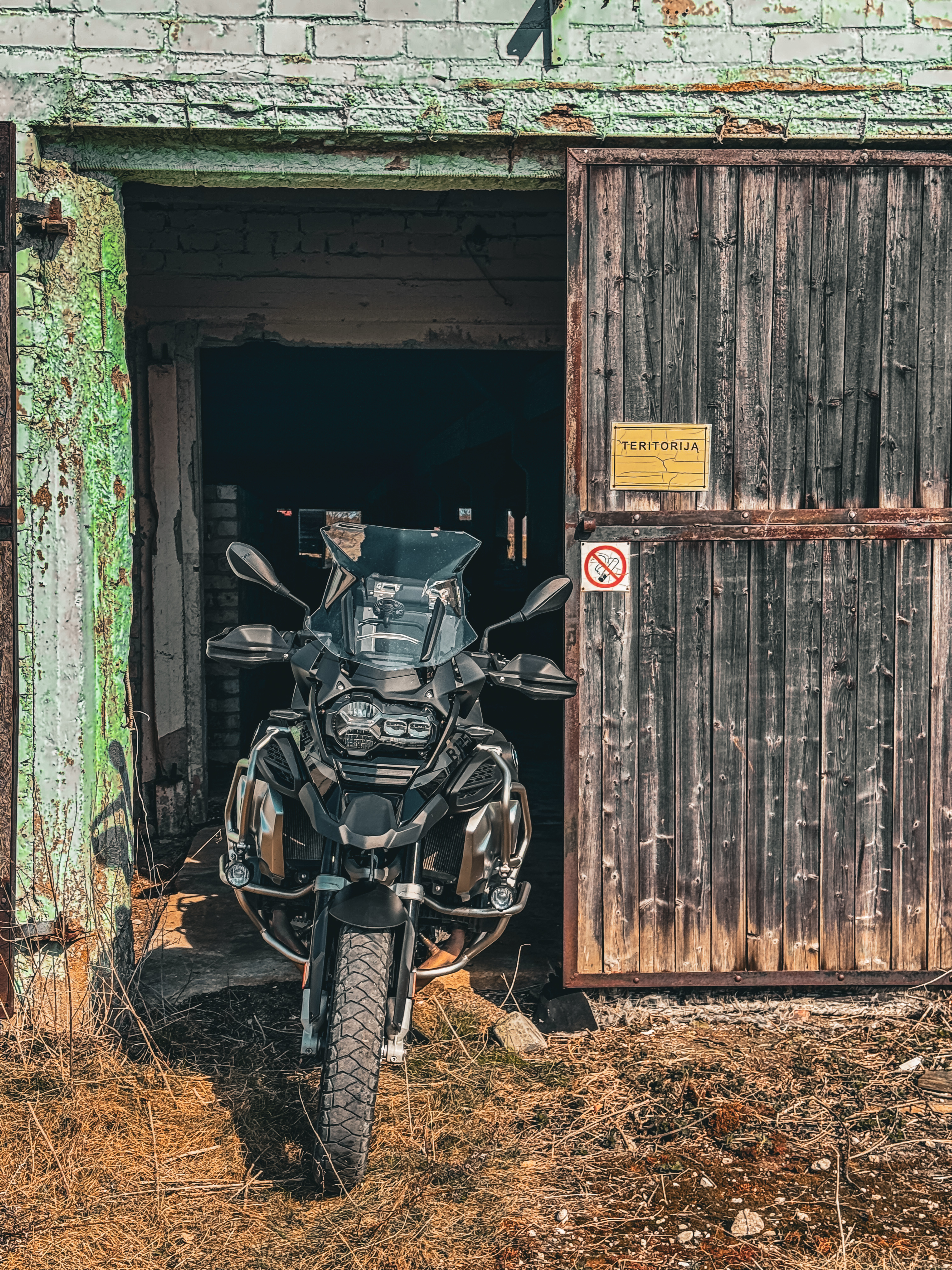
The Pagan Line
Eight days through the landscape that made the last pagans of Europe possible. Hill forts, river defences and ridge-top gravel roads across northern Lithuania and southern Latvia — the terrain that held the Teutonic crusade at bay for two centuries.
What this tour is
Lithuania was the last country in Europe to accept Christianity — 1387, nearly a millennium after the rest of the continent. The conversion was political. It did not go deep. The reason the Baltic tribes held out for so long was not theology but geography: dense forest, river valleys, ridge-top tracks and hill forts positioned above every approach. The Teutonic Knights spent two centuries trying to break through. In Žemaitija — the Samogitian highlands — they never fully did.
Eight days across northern Lithuania and southern Latvia, following the defensive landscape that made the last pagan culture in Europe possible. Kernavė and its five hill fort mounds above the Neris. The Semigallian resistance fortifications at Tērvete. The Samogitian ridge roads where the terrain still explains the history. The Hill of Crosses at Šiauliai — a pre-Christian site that the Soviets bulldozed three times and that kept returning.
The tour starts in Vilnius and ends in Klaipėda. It follows the line that held.
Route highlights
- Kernavė UNESCO hill fort complex — five mounds above the Neris, occupied 4th–14th century
- Tērvete archaeological park — Semigallian resistance fortifications, southern Latvia
- Hill of Crosses, Šiauliai — pre-Christian site, bulldozed by Soviets three times
- Medvėgalis and Šatrija hill forts — Samogitian highland core
- Bauska castle ruins — Livonian Order expansion into Semigallian territory
- Amber Coast — Roman-era trade route from Klaipėda to Palanga
- Ridge-top gravel roads through the Samogitian highlands
The itinerary
Daily distances and overnight locations. Accommodation is pre-booked on all tours.
Start in Vilnius and ride northwest to Kernavė — five hill fort mounds above the Neris river, UNESCO-listed, occupied from the 4th century until the 14th. The forts were not decorative; they controlled the river crossing and the valley below. This is what Baltic defensive architecture looked like at scale. Ride northeast to Molėtai in the lake district. Night in Molėtai.
Through the river valleys of the Šventoji and Mūša — the natural corridors the Teutonic Knights used for their winter campaigns, riding frozen rivers when the forests were otherwise impassable. The rivers were also the reason the same campaigns kept failing: thaw came fast, and retreating through mud was not a strategic option. The terrain here is still legible as a military landscape. Night in Biržai.
Cross into Latvia. The Bauska castle ruins at the confluence of the Mūša and Mēmele — built by the Livonian Order in the 15th century on territory taken from the Semigallian tribes after two centuries of resistance. The Semigallians held out longer than any other Baltic tribe, retreating into Lithuania in 1290 rather than accepting conversion. The castle marks the edge of where the crusade succeeded. Night in Bauska.
West to Tērvete — the archaeological park built around the hill forts of the Semigallian chief Nameisis, who fought the Livonian Order throughout the 1270s and 1280s. The earthwork fortifications are reconstructed on original foundations; the scale is instructive. Three concentric defensive lines, river protection on two sides, forest on the third. Night in Jelgava.
South back into Lithuania to the Hill of Crosses at Šiauliai. The site has pre-Christian origins; crosses began appearing in the 13th century as the Teutonic advance reached the region. The Soviets bulldozed the hill three times — in 1961, 1973, and 1975. Each time, crosses reappeared within weeks. There are now an estimated 200,000 of them. Night in Šiauliai.
West into Žemaitija — the Samogitian highlands, the core of Baltic resistance. The terrain here is what made it possible: the Samogitian upland sits above the surrounding lowlands, drained by rivers that cut deep valleys, covered in oak forest that did not encourage cavalry. The Teutonic Knights raided Žemaitija more than a hundred times between 1283 and 1410. They never held it. The Medvėgalis and Šatrija hill forts mark the ridge that faced east. Night in Plungė.
West to the Amber Coast — the trade route connecting the Baltic tribes to the Roman world from the 1st century BCE. Roman coins and goods moved north; amber moved south. The same coastal track runs from Klaipėda to Palanga on gravel above the dune line. The Palanga amber museum holds the collection; the beach gives context. Night in Palanga.
Return to Klaipėda. Final stop at the castle ruins — the Teutonic Order fort that anchored the northern end of the crusader advance into Baltic territory. The Pagan Line held for 150 years. The conversion that eventually ended it was negotiated, not conquered. The castle is what the negotiation was meant to make unnecessary. Debrief and departure.
What's in the price
- ✓7 nights accommodation (hotels, guesthouses and manor houses), all with breakfast
- ✓All excursions and local expert guides
- ✓All tolls and road fees during the tour
- ✓GPX route files
What to budget for
- ✗International travel to Vilnius
- ✗Fuel
- ✗Meals not listed in inclusions
- ✗Drinks
- ✗Personal expenses and souvenirs
- ✗Travel and medical insurance
- ✗Motorcycle hire (available on request)
- ✗Riding gear and equipment
- ✗Single room supplement (available on request)
Available dates
- 16–23 July 2026 Places available