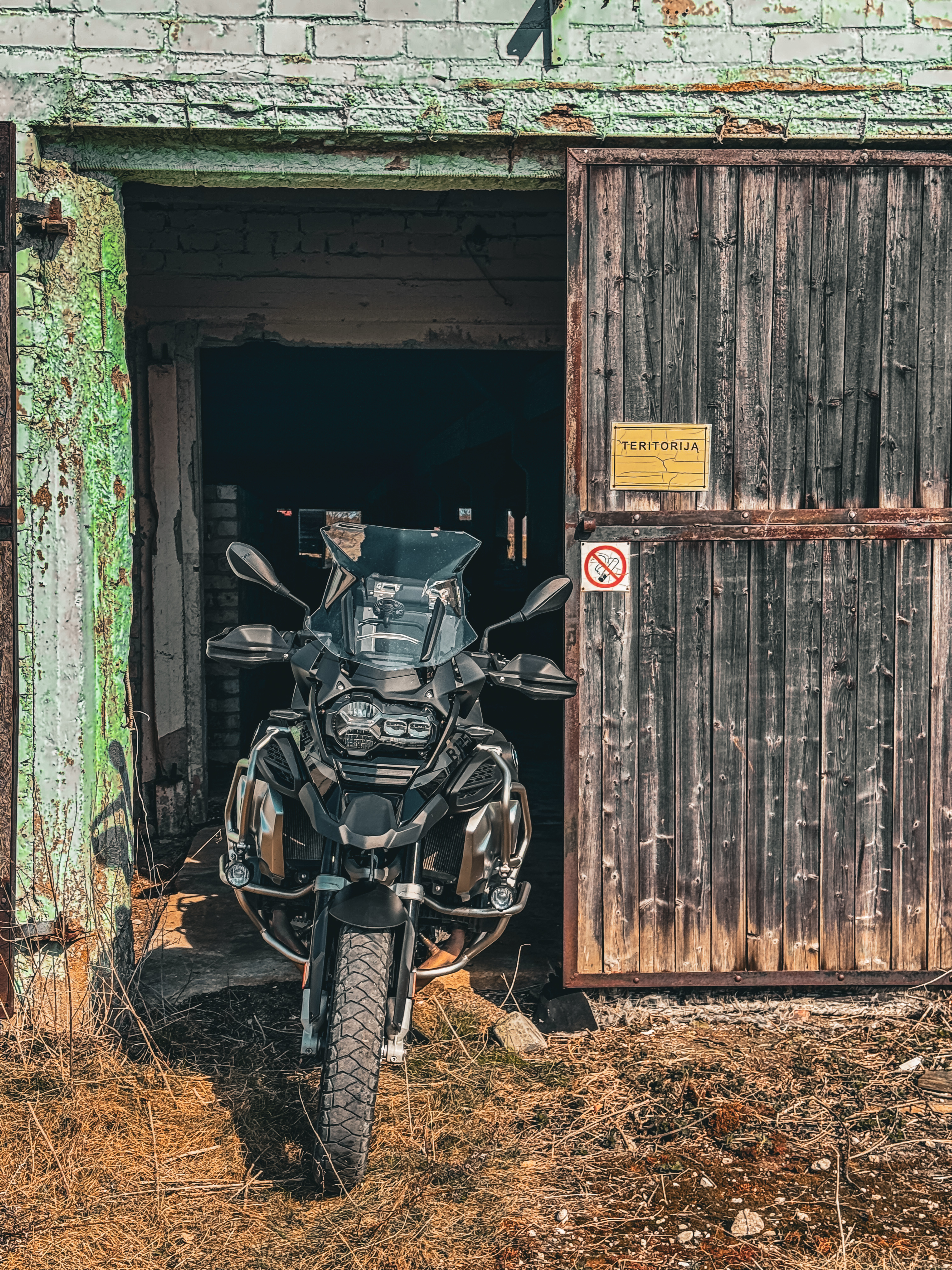
Ride where
others don't
Three countries. Thousands of kilometres of roads most riders never find. May through October.
Pick your route
The Baltic coast runs from Lithuanian dunes to Estonian islands — forest tracks, empty tarmac, fishing villages and border crossings that most riders never think to make. Small groups, local knowledge, no itinerary padding.
-
The Memel FrontLT · 7 daysSeven days through the last German-held front in the East. Fortifications, battlefields and evacuation routes along the Lithuanian coast and rivers — the history of 1939–1945 riding distance from the road.from €1,350
-
The Iron Curtain ArchipelagoEE · 7 daysSeven days through the Soviet Union's forbidden islands. Coastal gun batteries, abandoned military installations and the pine forests of Saaremaa and Hiiumaa — closed to outsiders until 1991, still carrying the weight of it.from €1,390
-
The Courland PocketLV · 6 daysSix days through the last German holdout on the Eastern Front. Deep gravel, forest tracks and the battlefields of western Latvia — the Courland Pocket held until the war was already over everywhere else.from €1,290
-
The Pagan LineLT · LV · 8 daysEight days through the landscape that made the last pagans of Europe possible. Hill forts, river defences and ridge-top gravel roads across northern Lithuania and southern Latvia — the terrain that held the Teutonic crusade at bay for two centuries.from €1,490
Three layers
of history
Lithuania was the last country in Europe to officially convert to Christianity — 1387, nearly a millennium after the rest of the continent. Hill forts, sacred groves and amber coast trading routes still mark the landscape. The routes pass through this quietly, without the tourist framing. It's there if you look.
The Holocaust in the Baltics happened fast and in the open — forests, ravines, fields outside the major towns. Ponary outside Vilnius, Rumbula outside Rīga, the Ninth Fort in Kaunas. These sites are on the routes. They are not optional stops. To ride through this landscape without knowing what happened in it is a particular kind of ignorance.
Forty-seven years. Annexed in 1940, occupied by Germany 1941–44, re-annexed by the Soviets until 1991. The forest brothers — armed partisans — kept fighting into the early 1950s. What they left behind is still in the trees: bunker sites, radar stations, closed military zones now open to the road.
Small group.
Local guide.
-
01
Maximum 8 riders
Small enough to take roads that don't accommodate coaches. Large enough to share the experience.
-
02
Built for adventure bikes
Routes designed for GS-class touring bikes. Comfortable on gravel and long days.
-
03
History is part of the ride
Every stop has context. Not a lecture — just enough to know what you're looking at.
-
04
These are real roads
Routes built from years of riding the region — including roads that don't appear on maps.
Ready to plan
your tour?
Tours run May through October. Groups fill early. Send a message with your dates and which tour interests you.
Send an enquiryOr email directly: [email protected]